The music
Conga, salsa and the Miami sound: what to hear in the band
A short, sourced tour of Cuban conga, salsa and the Miami Sound Machine, the traditions behind the live band the listing promises.
Save my table ↗Quick answer
The listing promises a live band playing congas, bongos and horns, with Cuban conga and salsa among the acts. Wikipedia explains that the conga is a Cuban carnival tradition, that salsa grew from Cuban son and other Caribbean forms and took its name in the twentieth century, and that Miami added its own chapter through the Miami Sound Machine, whose song Conga reached number ten on the Billboard Hot 100 in 1985. Listening for the drums, the horns and the steady clave pulse is the simplest way to follow the night.
Three musical threads
| Where it comes from | Listen for | |
|---|---|---|
| Conga | Cuban street carnivals in Santiago de Cuba, Camagüey and Havana | Drums, brass and a marching, call-and-response energy |
| Salsa | Cuban son plus Puerto Rican, Dominican and other Caribbean forms | Horns, congas, a clave pattern and dance-floor rhythm |
| Miami Sound Machine | A Miami band founded in 1975 by Emilio Estefan | Latin rhythms with pop and R&B grooves |
Conga: the drum and the street parade
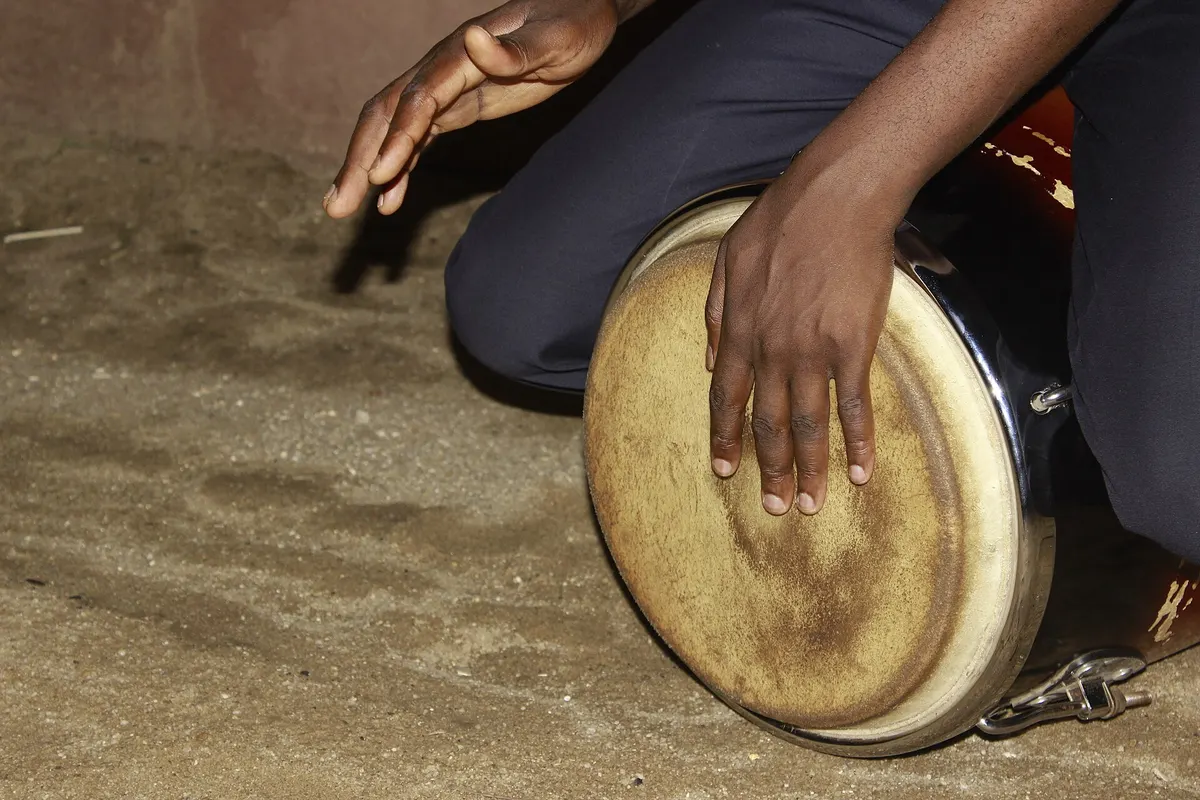
Wikipedia explains that the term conga refers to the music groups within Cuban comparsas, large ensembles of musicians, singers and dancers with their own costume and choreography, who perform in the street carnivals of Santiago de Cuba, Camagüey and Havana. The instrumentation differs by city: congas from Santiago include a Chinese cornet and drums such as the quinto, while those from Havana use trumpets, trombones and saxophones with side drums and bass drums. The tradition dates back to the nineteenth century, though its origins are obscure. The conga drum, called tumbadora in Cuba, took its name from the comparsa congas, and the style entered Cuban popular music in the early twentieth century through artists including Eliseo Grenet and Armando Oréfiche.
Salsa: a name that arrived late
Salsa, Wikipedia says, is dance music mainly influenced by traditions from Cuba, Puerto Rico and the Dominican Republic, built mostly on son montuno and son cubano with elements of cha-cha-chá, bolero, rumba, mambo and jazz. The word means sauce in Spanish, and writers dispute how it became a musical label; one account points to a 1930 Ignacio Piñeiro song, and another to the promoter Izzy Sanabria, who hosted a television show called Salsa in 1973. The first self-identified salsa band is given as Cheo Marquetti y su Conjunto in 1955, and the style flourished in New York in the 1970s with Celia Cruz, Willie Colón, Rubén Blades and others.
What a salsa band sounds like
Wikipedia notes that Arsenio Rodríguez developed the ensemble that most salsa bands follow, adding a horn section and tumbadoras, or congas, to the son cubano group. The core groove comes from the clave, two wooden sticks struck together, and every other instrument plays with or around it; the conga plays a pattern called the tumbao. That is why the booking page's list of congas, bongos and horns reads like the textbook line-up. If you listen, you will hear the horns answering the singers and the drums keeping the dancers moving.
The Miami chapter
Miami's own contribution is documented in Wikipedia's article on the Miami Sound Machine, a Latin pop band formed in 1975 by Emilio Estefan as the Miami Latin Boys, renamed in 1977, with Cuban-born Gloria Estefan on vocals. A permanent horn section arrived in 1980, a combination of Latin rhythms with American R&B that the article calls a crossover standard. Their song Conga, from the 1985 album Primitive Love, reached number ten on the Billboard Hot 100. The booking page promises music from the 1980s and 1990s alongside present-day hits and a Cuban conga act, though it does not name songs, so whether you hear that song is not something this guide can say.
Frequently asked questions
Is the conga a drum or a dance?
Both. Wikipedia says conga refers to Cuban carnival music groups and the music they play, and the conga drum took its name from them.
Do I need to dance salsa to enjoy the show?
No. The show is staged for watching, though one reviewer describes the guest of honour being brought to the front to dance.
Will the band play Miami Sound Machine songs?
The page gives no running order, so it cannot be promised.
What does the band consist of?
The listing names congas, bongos and horns, plus music from the 1980s, the 1990s and today.
Sources